Cosmology and Astrostatistics

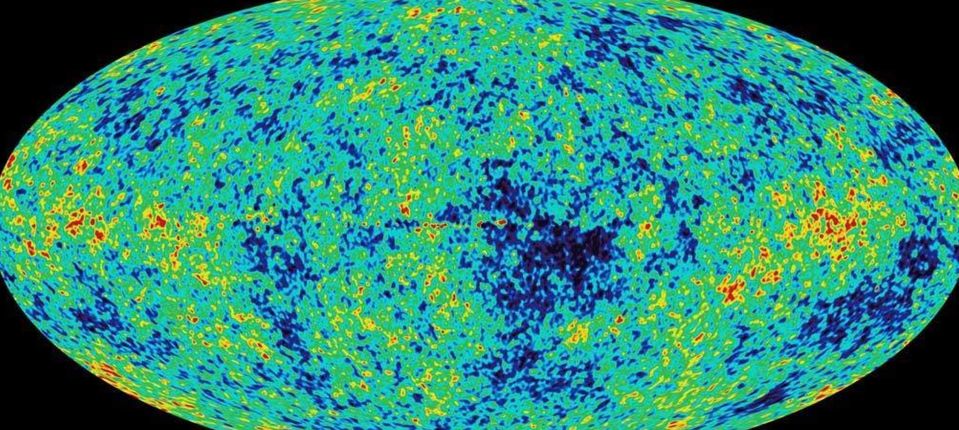
Cosmology is the science of studying the Universe as a whole, its origin, its composition and its properties. We are particularly interested in investigating the cosmic microwave background, the relic radiation from the Big Bang, and in developing and deploying advanced statistical techniques to compare theory and observations, a field which is known as Astrostatistics.


We are part of CAPAC, Imperial's Centre for Astroparticle Physics and Cosmology. At Imperial Astrophysics, we are interested in the following subjects:


  • Astroparticle physics: this looks at various particles as messengers from the Universe, for example dark matter, neutrinos and cosmic rays. We are developing new tools to constrain fundamental physics using astroparticle probes, including direct and indirect dark matter detection techniques.
  • Cosmology and the cosmic microwave background: the relic radiation from the Big Bang is one of the pillars of modern cosmology. We are involved in the data analysis of the Planck satellite, currently observing the microwave sky.
  • Dark energy: the mysterious component that is apparently driving the expansion of the Universe in an ever accelerating way. We are interested in using a variety of cosmological probes to constrain the properties of dark energy, and in helping design future measurements, from the ground and from space. 
  • The primordial Universe: we work towards understanding the period of ultra-fast expansion known as "inflation", which expanded the Universe exponentially over a very short amount of time right after the Big Bang.


The Cosmic Microwave Background

The Cosmic Microwave Background, or CMB, is one of the most important confirmed predictions of the Big Bang model of our observed expanding Universe. It consists of light that last interacted with other matter in the Universe about 400,000 years after the Big Bang. The CMB therefore traces the state of the Universe at this early time, when it was hot, dense and much simpler than it is today.
Experiments like MAXIMA and BOOMERANG, both with strong Imperial involvement, first mapped the CMB on the sub-degree scales, allowing the first measurement of the global curvature of spacetime, equivalent in Einstein's General Relativity to the overall density of matter and energy. Imperial is now involved in the analysis of data and th extraction of science with ESA's Planck Surveyor satellite, which will map the intensity and polarization of the CMB over the entire sky with a higher resolution and sensitivity than has previously been achieved.


STAFF:

Andrew Jaffe

Michael Rowan-Robinson

Roberto Trotta

POSTDOCTORAL RESEARCH ASSOCIATES:

Jude Bowyer

Antoine Chamballu

Dmitri Novikov

PhD Students:

Marisa March

Laura Watson 

EXTERNAL PROJECTS:


Meetings and conferences