Press room

A Star is Born

Imperial College Press Release (18 December 2009)


The European Space Agency has released a preview of the first science results from the Herschel Space Observatory, including the UK-led SPIRE instrument. The new data which include images of previously invisible stardust - the stuff that all life is made from - will give us valuable new information about how stars and galaxies are made and reveal the life cycle of the cosmos.


Physicists from Imperial College London played a key role in conceiving, designing and developing the SPIRE instrument over the last 20 years, and more recently have been instrumental in developing the software to convert masses of raw data from space into the pictures released by the European Space Agency today.

Read the full article


Why we shouldn't release all we know about the cosmos

New Scientist (2 December 2009)


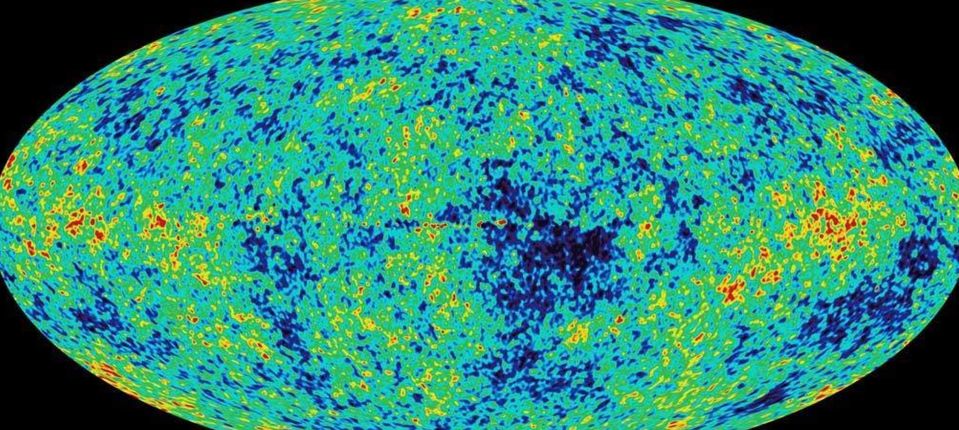
The European Space Agency's Planck mission is busy surveying the cosmic microwave background, aka the 'echo' of the big bang, and in 2013 will release a feast of data that promises to deliver profound new insights into the origin of the universe. Surely a victory for science? Only, it seems, if cosmologists can resist the temptation to gorge themselves on all those goodies... The answer, according to Roberto Trotta of Imperial College London, is to be frugal with what you let the cosmologists see. Instead of giving out all the data at once, the supply should be rationed. Drip-feeding will allow the development of new hypotheses which can be tested as more of the Planck information is released. If we don't adopt this approach, we risk wasting the finest cosmology data set we have ever had, and remaining forever in the dark. 

Read the full article

Coverage (in Italian) on Swiss newspaper "Corriere del Ticino" 


Herschel'S Cameras combine to show the galaxy in a new light

Imperial College Press Release (02 October 2009)


The Herschel Space Observatory has produced spectacular new images of interstellar material in our galaxy, using the UK-led SPIRE camera in tandem with Herschel's other camera, PACS. The new pictures, made during the first trial run with the two instruments operating at the same time, have unveiled a small part of our Milky Way Galaxy as we have never seen it before, and bode well for one of Herschel's main scientific projects, which is to survey large areas of the galaxy.

Read the full article


Space 'time machine' takes first glimpse into the past

Imperial College Press Release (17 September 2009)


The Planck space observatory, the European Space Agency's mission to study the early Universe, has successfully completed its initial test survey of the sky, it was announced today. The test confirms that Planck's sophisticated cooling system and scientific instruments, which Imperial College London physicists played a key role in developing, are working well.

Read the full article


Imperial college press office 

Laura Gallagher

Research Media Relations Manager

Telephone: +44 (0)20 7594 8432

Email: l.gallagher@ null imperial.ac.uk


http://www.imperial.ac.uk/media