Information For Students

PhD projects

Projects on offer in 2012 are given below. Please note, however, that applicants are free to nominate their preferred area of research from within the range of the group's interests. The allocation of students to supervisors depends on finding the best matches.


We would strongly encourage you to contact the staff members in your area of interest to discuss potential projects before making an application.

FUNDAMENTAL COSMOLOGY FROM GALAXY SURVEYS: PROFESSOR ALAN HEAVENS

{If you are interested in finding out more about this project please contact Professor Heavens via the email address afh@ null roe.ac.uk}


The present-day galaxy distribution contains a wealth of information about the cosmos, including data on the most important cosmological questions of the day: the nature of Dark Matter, Dark Energy, Inflation and the theory of gravity.   Two major difficulties inhibit the interpretation of galaxy data.  They are firstly that the galaxy density may not reflect accurately the underlying mass density, and secondly, that the density field has undergone considerable complex evolution over time. Disentangling both of these is necessary to confront theory cleanly with observation.  This project will build on recent developments (Simpson et al. 2011, arXiV:1107.5169) based on manipulating the galaxy density field (‘clipping’) , which makes comparison with theory much more robust.  The project could investigate a number of avenues, such as searching for evidence of inflation, testing Einstein gravity theory, the evolution of galaxy bias with redshift, or the determination of neutrino masses.  The project would involve theoretical methods, programming of algorithms, and application to data such as the GAMA survey.

Reionization and the 21 cm signal: Dr Jonathan Pritchard

During the first billion years of the Universe, the first galaxies formed producing UV light that ionized the intergalactic medium that surrounded them.  Ionized bubbles around groups of galaxies grew and overlapped in the process known as reionization.  This period lies at the edge of current observations and comprises one of the least understood moments in the history of the Universe.  Since only the brightest of the galaxies from this time can be seen with the Hubble Space telescope alternative techniques to study this period are necessary.  Observations of the redshifted 21 cm line with a new generation of low frequency radio arrays such as LOFAR and SKA will transform our picture of this period via 3-dimensional maps of the distribution and state of neutral hydrogen.  Key to exploitation of these experiments will be an understanding of the statistical properties of reionization and the 21 cm signal.  The aim of this PhD will be to make use of semi-numerical simulations of reionization to develop and test new statistical probes of the reionization field to determine optimal statistics.  This project will require the student to build computational and statistical tools while developing an understanding of cosmology and the period of reionization and the first galaxies.

FINDING THE RAREST ASTRONOMICAL OBJECTS IN LARGE SKY SURVEYS: Dr Daniel Mortlock

Astronomy has entered an era of large surveys in which telescopes systematically scan the sky and the resultant catalogues are made available to the entire research community.  As a result, some of the most interesting astronomical objects - cold stars, distant quasars, sources multiply imaged by gravitational lensing - have been observed and catalogued in these huge databases, but remain unidentified by scientists.  The volume of data is too great to hunt by eye, but such searches can be automated by combining heuristic data-mining techniques with modern statistical methods.  This project will involve the development of such search methods and the use of Bayesian modelling techniques to find promising objects for further study and avoid the selection of too many false positives.  It will also be a very flexible project, with the possibility of "break out" science to investigate

the most interesting objects that are found.

DUSTY STAR-FORMING GALAXIES FROM LOW TO HIGH REDSHIFT: DR DAVID CLEMENTS

Dusty galaxies play a significant role in galaxy formation and evolution, with the obscured star formation buried within them contributing to at least 50% of the energy generated over the entire history of the universe. Our understanding of these objects has been hampered by our inability to study them consistently from the nearby to the distant universe, but the Herschel and Planck satellites are now changing all of that. The new data coming from these space observatories are providing vast range of new data on dusty galaxies both in the local universe and out to the highest redshifts. Projects available include studies of the range of properties of dust in nearby galaxies using data from both Herschel and Planck, the search for high redhsift dusty galaxies, many of which are gravitationally lensed, and the combination of Herschel and Planck data to allow us to search for protoclusters of dusty galaxies. These projects will involve both the analysis of data from Herschel and Planck and the use of ground-based facilities, such as JCMT, ALMA, VLT and SMA, to obtain followup observations of interesting objects so that they may be better understood.

SOLAR AND STELLAR IRRADIANCE VARIATIONS: DR YVONNE UNRUH


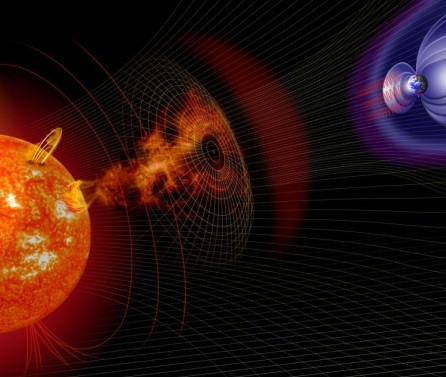
Quantifying solar irradiance changes is particularly important when trying to disentangle man-made and natural influences on the Earth's climate. On time-scales of days to decades, irradiance variability isdue to changes the emergent magnetic flux that can be seen as dark sunspots or bright faculae (small-scale magnetic flux tubes). Providedwe know the contrast of spots and faculae compared to the `quiet Sun', solar irradiance changes can be modelled using solar surface images. The main aim of this project is to improve the contrast calculations of the magnetic flux tubes, especially near the solar limb as this is currently the main weakness in the irradiance modelling. 


Stellar (micro)variability is often seen as a nuisance when trying to find planets using the transit method and planet hunters are thus lookingfor ways to characterise the stellar `noise'. Current transit searches with their high-cadence and high-precision stellar lightcurves offer an unprecedented opportunity to study stellar variability. The aim of the project is to use Kepler data to infer spot covering fractions, life times and preferred spot locations on a large sample of stars and understand how these change with stellar activity levels.  

COSMOLOGY — CMB AND LARGE-SCALE STRUCTURE: PROFESSOR A JAFFE

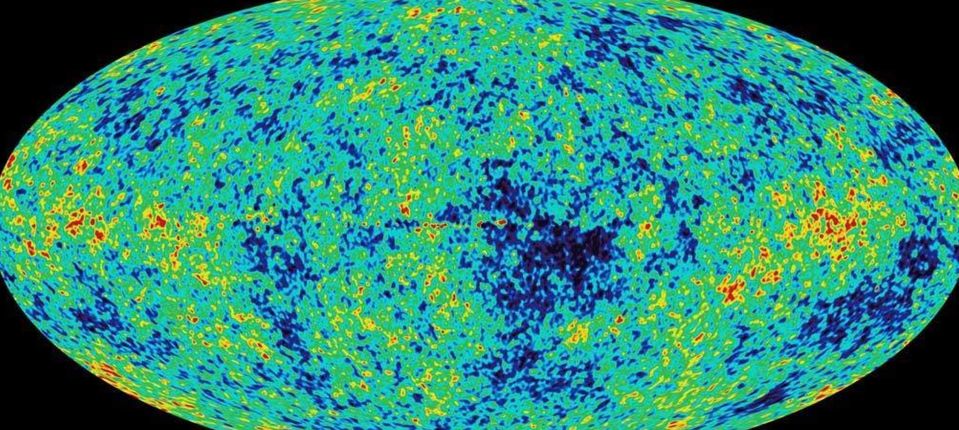
The Planck Surveyor Satellite was launched in May 2009 to measure the Cosmic Microwave Background (CMB). Combined with data from a new generation of sub-orbital CMB experiments, we will have a direct view of the early Universe with high sensitivity over a wide range of scales, and we will study how the information it will provide may allow us to measure the cosmological parameters that govern the evolution of our Universe.


Many galaxies harbour supermassive black holes at their centres. As galaxies are built up from smaller components, these black holes may merge, giving off copious bursts of gravitational radiation. We will study the background of gravitational waves produced by this violent process, eventually observable by the LISA satellite.


ASTROPARTICLE DARK MATTER PROBES: DR ROBERTO TROTTA 

Adopting a multi-messenger approach to the characterization of particle dark matter we aim to unify several aspect of fundamental particle physics, astrophysics, cosmology and statistics. The project aims to achieve a better quantitative understanding of the characteristics and nature of dark matter from current and upcoming data, including the Large Hadron Collider at CERN in Geneva, underground direct detection experiment and astrophysical probes of dark matter, such as gamma ray, neutrinos and the cosmic microwave background. This project is ideally suited to students who enjoy numerical and data analysis work, and will require skills in all four domains involved. This project is highly innovative because of the ground breaking nature of the methodology, attempting for the first time to unify multiple probes for dark matter characterization.

COSMOLOGY AND ASTROSTATISTICS - A PRINCIPLED STATISTICAL APPROACH TO BARYONIC ACCOUSTIC OSCILLATIONS: DR ROBERTO TROTTA


Bayronic Acoustic Oscillations (BAO) are the statistical imprint of sound waves in the early Universe, leftover in the large scale distribution of galaxies in the sky. The fingerprint of early Universe acoustic oscillations is a bump in the correlation function of galaxies separated by a characteristic scale of approximately 100 Mpc. This scale can be used a standard ruler in the sky to measure distances, and hence as a cosmological probe to determine the characteristics of the mysterious dark energy component. This project will aim at developing a principled statistical approach to the analysis of present and future large scale structure data. The goal is to develop, implement, test and deploy a fully Bayesian analysis of large scale structure data, improving on current methods especially in regards to the error estimation, as well as in terms of efficiency. The newly developed pipeline will be applied to existing data sets (eg, SDSS, WiggleZ) and on simulated future surveys, in particular from the Euclid satellite (an ESA mission due for launch in 2018). Good computational skills will be a bonus for this project, which requires a theoretical mindset (perturbation theory, general relativity, cosmology) as well as interest in engaging with sophisticated statistical (Bayesian) inference methods.

Accretion Disks and Planet Formation Around Red and Brown Dwarfs:Dr Subhanjoy Mohanty

The project will focus on observational and theoretical study of the properties of accretion disks around red dwarfs and brown dwarfs, to determine the processes leading up to planet formation around such objects.  These dwarfs make up more than 75% of the stellar population in our galaxy (and new studies suggest even a larger fraction in other galaxies), so they are now the subject of intense interest for planet formation and habitability.  In this project, we will make use of data from the largest ground and space-based telescopes, as well as theoretical tools such as magnetohydrodynamics and computer simulations, to study the conditions most conducive to such planet formation.

Distant galaxy clusters in the UKIDSS Large Area Survey: ProfESSOR Steve Warren

TBD


Past projects have included:


  • The Nature and Evolution of 70 micron selected galaxies - Dr D.L. Clements
  • Galaxy X-Ray and Far-IR Co-evolution - Dr D.L Clements
  • The X-ray-Starburst Connection in the Herschel Era - Dr D.L Clements
  • Advanced statistical methods for astrophysical probes of dark energy - Dr R Trotta
  • The early Universe and cosmological parameters from the Cosmic Microwave Background, Gravitational Waves, and other observations - Professor A Jaffe
  • Determining the topology of the Universe from the Cosmic Microwave Background - Professor A Jaffe
  • Accretion Disks, Planet Formation and Habitability Around Red and Brown Dwarfs - Dr S Mohanty
  • Towards optimal statistics of reionization and the 21 cm signal - Dr J Pritchard
  • Cool pre-main sequence stars: their surfaces and circumstellar environments - Dr Y Unruh
  • Understanding solar brightness changes on climate-relevant time scales - Dr Y Unruh
  • Gravitational lensing, dark matter, and black holes - Professor S Warren
  • Obscured AGN in the AEGIS survey - Professor S Warren